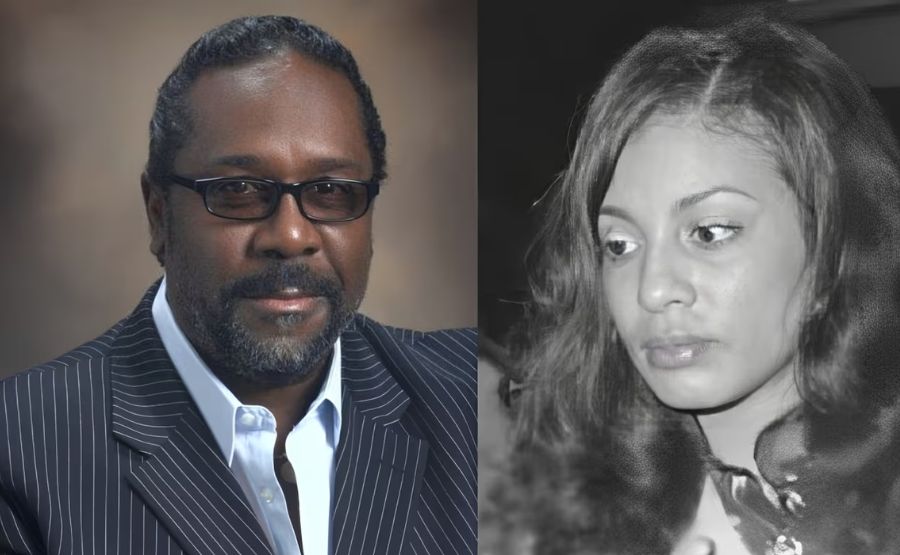
Quick Bio
| Detail | Info |
| Full Name | Cicely Johnston |
| Born | 1945 (exact date undisclosed) |
| Birthplace | Palm Springs, California, USA |
| Nationality | American |
| Ethnicity | African-American |
| Religion | Christian |
| Occupation | Former model, former airline stewardess |
| Spouse | Demond Wilson (m. May 3, 1974 – d. January 30, 2026) |
| Children | 6: Christopher, Demond Jr., Nicole, Melissa, Sarah, Louise/Tabatha |
| Residence | Palm Springs, California |
| Known For | Caged Heat (1974); being Demond Wilson’s wife |
The Hook Nobody Talks About
Here’s what gets me: Cicely Johnston has been one of the most Googled “celebrity spouses” of the past few years, and almost nobody can tell you a single thing she’s actually said. Not one interview. Not one public statement. Not even a social media account.
She is, in the most literal sense, famous for being quiet.
And that — in the age of Instagram parasocial culture, celebrity PR machines, and “reality star” pipelines — is genuinely extraordinary. In a world where being adjacent to fame is treated like a career opportunity, Cicely Johnston looked at fifty-plus years of Hollywood marriage and said: nope. I’m good.
That choice deserves to be examined a little more seriously than most celebrity bio sites are willing to do.
See also “Jayne Posner: The Woman Who Walked Away from a Legend And Won“
Before the Famous Husband: The Life Nobody Chronicles
Let’s start where most articles don’t bother — before Demond Wilson existed in her world.
Cicely Johnston was born in 1945 in Palm Springs, California. That’s a detail worth sitting with. Palm Springs in the mid-twentieth century was a resort town of sharp contrasts — wealthy white vacationers and golf courses on one side, Black and Latino communities largely invisible on the other. Growing up African-American in that environment during the postwar years meant navigating a world that was simultaneously glamorous by reputation and deeply stratified by race.
She grew up in the period of civil rights. She would have been a young woman when Rosa Parks refused to give up her seat, when Selma happened, when the country was actively debating whether she deserved equal rights. That context matters. The choices she made — to enter modeling, to work as a flight attendant — weren’t just lifestyle decisions. They were boundary-pushing moves for a Black woman of that era.
Before modeling, she worked as an airline stewardess. Think about what that meant in the 1960s. Flight attendants were treated partly as glamour props and partly as service staff. The work demanded composure, appearance management, and the ability to project calm in uncomfortable situations. Those skills would come in handy later.
Then came modeling. The exact timeline is fuzzy — sources suggest late 1960s into the early 1970s. Major campaigns? Nothing verified. But she worked. In print. In local shows. In a fashion industry that was just beginning — slowly, reluctantly — to make room for Black women. She wasn’t Naomi Sims or Beverly Johnson, whose names cracked open magazine covers. But she was part of that same cultural moment.
Caged Heat and the One Screen Credit That Defines Her Public Identity
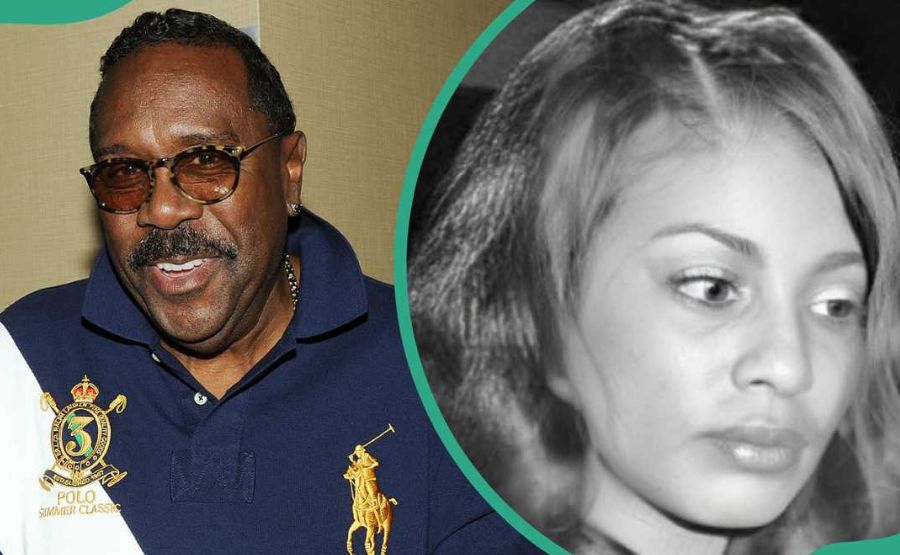
In 1974, a woman named Cicely Johnston appeared in a Roger Corman-produced exploitation film called Caged Heat, directed by Jonathan Demme. Yes — that Jonathan Demme. The one who later made The Silence of the Lambs. At this point he was still cutting his teeth in the B-movie world.
Caged Heat is a women-in-prison film. Grindhouse stuff. It’s since been reevaluated as a feminist genre piece — Demme’s direction is genuinely interesting in places — but at the time it was exploitation cinema. Cicely’s appearance is uncredited. This is her entire documented filmography.
Here’s the thing: some sources puff this into “she broke into the entertainment industry” territory. Let’s be honest about what it was. One uncredited appearance in one B-movie. That doesn’t constitute an acting career. It’s a data point — an interesting one, and a valid one — but let’s not manufacture a Hollywood arc that isn’t there.
What it does tell us: in 1974, the same year she married Demond Wilson, Cicely Johnston was moving in entertainment circles, had a screen presence, and was not sitting on the sidelines. She was living her own life. She wasn’t just waiting for a famous man to define her.
May 3, 1974: The Wedding That Changed Everything
Demond Wilson was, in May 1974, one of the biggest names on American television. Sanford and Son — the Norman Lear-produced NBC sitcom in which Wilson played Lamont Sanford, the exasperated son of Redd Foxx’s Fred Sanford — had been dominating prime-time ratings since 1972. The show cracked the Nielsen top ten in five of its six seasons. It was appointment television. Wilson was a genuine star.
According to reports, he was also going through one of the most difficult times in Sanford and Son’s history. Redd Foxx had temporarily walked off set in 1974 over a salary dispute. The show was reorganizing around Wilson’s character. The pressure must have been enormous.
And into this, Cicely Johnston married him. Quietly. Small ceremony. Close friends and family only.
No splashy magazine spread. No press. The contrast to Wilson’s public persona — comedic, high-energy, inescapably visible — couldn’t have been sharper.
Six Kids, and the Part the Internet Gets Wrong
Cicely and Demond Wilson have six children. Here’s where sources start tripping over themselves. Some list the children as Christopher, Demond Jr., Nicole, Melissa, Sarah, and Louise. Others swap “Louise” for “Tabatha.” The New York Times obituary for Demond lists Christopher, Nicole, Melissa, Sarah, Tabatha, and Demond Jr.
Are they biological children? Were some adopted? Several sources claim they adopted all six, or some combination. Frankly, the public record isn’t clean on this. What we do know: six children, raised in Palm Springs, largely out of the press. One source mentions Christopher playing youth sports. Another notes that Sarah has worked in writing and occasional acting.
The family shielded the kids from exposure. Deliberately. In an era when child actors and celebrity offspring were routinely exploited, Cicely and Demond chose something different: a normal childhood, or as close to one as you can manage when your dad is on primetime TV.
The 1980s: When Everything Shifted
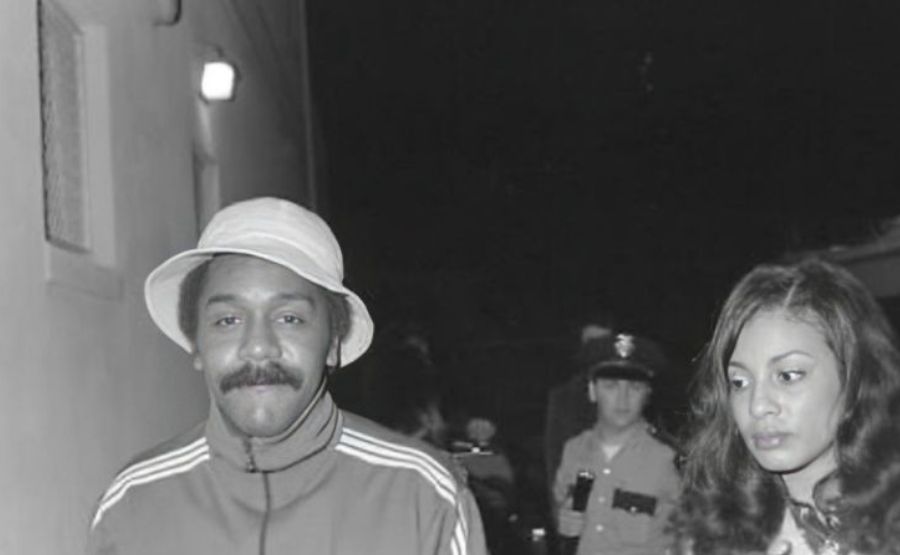
Sanford and Son ended in 1977. Wilson moved on — Baby… I’m Back! in 1978, then The New Odd Couple in 1982-83. Neither hit the heights of Sanford and Son. The post-breakout plateau is a grinding place to be in Hollywood.
Then something larger happened. Wilson, who had carried a private Christian faith since childhood — rooted in a near-death experience with a ruptured appendix at age twelve — went deeper into that commitment. In the mid-1980s, he was ordained as a minister in the Church of God in Christ. He founded Restoration House of America, a ministry for former inmates.
One source indicates the transition from TV star to full-time minister was not smooth. There are oblique references to personal struggles, to Cicely holding the family together through difficult periods. Nothing specific is documented publicly — and that’s largely because Cicely made sure it stayed that way. She reportedly never discussed family hardships in public. She handled it internally, moved forward, and supported the transition.
What that took, from where I’m standing, is considerable. Supporting someone through a complete identity reinvention — from beloved sitcom star to ordained preacher — while raising six kids and maintaining your own sense of self? That’s not a support role. That’s serious, largely invisible, labor.
The 27-Room Beverly Hills Mansion They Gave Up
One detail that surfaces in several accounts: at some point, the Wilsons sold a 27-room Beverly Hills mansion and relocated to a simpler life in Palm Springs. This was tied to Demond’s religious transformation — a deliberate scaling back, a statement of values.
Think about what that means for Cicely. She had lived in the orbit of celebrity wealth. The move to Palm Springs, to a faith-centered, lower-profile existence, was as much her choice as his. She didn’t leave. She didn’t use the transition as leverage or drama. She moved with it.
Demond told the LA Times in 1986 that they had left behind “the rat race and false people.” He was speaking in the context of his faith. But Cicely’s presence in that “we” is not incidental.
A Name Confusion Worth Clearing Up
Real quick: Cicely Johnston is not Cicely Tyson.
Cicely Tyson — the iconic actress nominated for an Oscar, beloved for Sounder and The Autobiography of Miss Jane Pittman — shares only a first name and broad cultural background with Cicely Johnston. The two are not related. They have no documented connection.
But look, when you’ve got an uncommon name, an African-American heritage, and a connection to 1970s entertainment culture — people assume. A few sites even tried to weave some link to Miles Davis into it (Tyson’s ex-husband), which is a real stretch. They are different people. Full stop.
The Last Fifty Years, and What Came After
For decades after the mid-1970s, Cicely Johnston appeared almost nowhere in the public record. No interviews. No social media. No documented professional activity. Some sources estimate her net worth as folded into Demond’s — he reportedly had around $1.5 million at the time of his death, based on his TV residuals, book royalties, and ministry work. Whether Cicely has independent wealth is genuinely unknown.
What we do know: she was still there. Palm Springs. The family home. Through Demond’s reinvention as a preacher. Through his books — including Second Banana (2009), his memoir of the Sanford and Son years, which he called a “documented truth” of backstage history. Through his touring faith-based theatrical productions in the 2010s. Through his last screen role in a 2023 short film.
And then January 30, 2026. Demond Wilson died at home in Palm Springs from prostate cancer, surrounded by family. Cicely was there. His son Demond Jr. confirmed it to TMZ. His other son Christopher spoke to the New York Times. The family asked for privacy.
His publicist described Demond as “a devoted father, actor, author, and minister.”
He is survived by Cicely Johnston and their six children, and two grandchildren.
Final Words
Look, here’s my honest read on Cicely Johnston.
The internet treats her as a mystery to be solved — a gap in the record that exists because she’s hiding something, or because she’s boring, or because women adjacent to famous men are just accessories to be documented. None of those framings are right.
She had a life before Demond Wilson. She worked in a profession — flight attendant — that required presence and composure. She modeled in an era that was actively hostile to Black women in that space. She appeared, however briefly, in a Jonathan Demme film. She made choices about her own public presence that most people in her position don’t make.
Then she married someone famous and chose, quite deliberately, not to turn that into a springboard. In 2025 terms, this is almost incomprehensible. The influencer economy would have handed her a platform on a silver platter. Celebrity-spouse content is its own genre. All of it was rejected by her.
Is that admirable? Probably. Is it also frustrating for anyone trying to write a thorough biography? Absolutely. There’s only so much verifiable material here, and I’m not going to dress that up. A lot of what circulates about Cicely Johnston online is speculation marketed as fact — birth dates that don’t match, career narratives that inflate a single film credit, net worth figures pulled from nowhere.
What’s real: she was born in 1945. She worked before she married. She married Demond Wilson in 1974. She raised six children mostly outside the spotlight. She stayed for fifty-plus years, through fame and reinvention and whatever private difficulties came with both. She was there when he died.
That’s life. It doesn’t need embellishment.
FAQs
1. Who is Cicely Johnston?
A former model and flight attendant who married actor Demond Wilson in 1974 and raised six children in Palm Springs. She had one documented screen credit, in the 1974 film Caged Heat, directed by Jonathan Demme.
2. How old is Cicely Johnston?
Born in 1945, which makes her around 80 years old as of 2025. Her precise birthdate has never been made public.
3. Is Cicely Johnston related to Cicely Tyson?
No. The two share a first name and African-American heritage but are not related and have no documented connection.
4. Did Cicely Johnston have a career of her own?
Yes — before and briefly during her marriage. She worked as an airline stewardess, then modeled in the late 1960s and early 1970s. She appeared in Caged Heat in 1974. After that, her documented professional activity is essentially nonexistent.
5. When did Demond Wilson die?
January 30, 2026, in Palm Springs, California, from complications related to prostate cancer. He was 79. Cicely was listed among his survivors.
6. How many children do Cicely and Demond have?
Six. Their names are Christopher, Demond Jr., Nicole, Melissa, Sarah, and Louise (also referred to as Tabatha in some sources). Two grandchildren were also noted in his obituaries.
7. Did Cicely ever act?
One credited appearance — Caged Heat (1974). That’s the complete documented record. Claims of a broader acting career don’t hold up to scrutiny.
8. Why does Cicely Johnston have so little public presence?
Because she chose it that way. She has never given interviews, does not have public social media accounts, and has consistently declined the kind of public profile that celebrity-spouse status often generates.
9. Where does Cicely Johnston live now?
Palm Springs, California — the same city where she and Demond lived for decades and where he died.
10. What is Cicely Johnston’s net worth?
Unknown. Demond Wilson’s net worth was estimated at around $1.5 million at the time of his death. Cicely has no documented independent business ventures or post-modeling income on record.
11. Was their marriage happy?
By all indications, yes — though “happy” is doing a lot of work there. They stayed together for over fifty years through major career shifts, spiritual transformation, and the ordinary pressures of raising a large family. That’s real. Whether it was always smooth is something neither of them ever disclosed publicly.
12. What is Cicely Johnston’s legacy?
Longevity. Discretion. The decision — sustained over decades — to be a person rather than a persona. In celebrity-adjacent culture, that is genuinely unusual, and maybe worth more respect than it typically gets.
Read Inspiring Life Stories Of Influential Personalities On The Glory Magazine.